
How to Use a Panel Upgrade to Enhance IFR Situational Awareness
Bend Aircraft – How to Use a Panel Upgrade to Enhance IFR Situational Awareness and Decision-Making
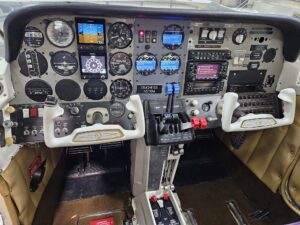 Flying under Instrument Flight Rules requires skill, planning, and quick decisions. In addition, pilots need clear information about the aircraft, weather, terrain, traffic, and flight path. A modern panel can place this information where pilots can see and understand it faster.
At Bend Aircraft, a well-planned panel upgrade can help pilots improve IFR situational awareness. Modern avionics can also reduce workload and support better decisions during demanding flights.
However, adding new equipment alone does not create a better panel. Instead, pilots should choose avionics that work together and support the way they fly.
Why IFR Situational Awareness Matters
Situational awareness means understanding what is happening around your aircraft. More importantly, it means knowing what may happen next.
During VFR flight, pilots can often use outside visual references. However, IFR conditions can remove many of those references. Clouds, darkness, rain, and low visibility can make the flight deck your main source of information.
Therefore, your instruments need to present useful information quickly and clearly. A confusing or outdated panel can increase workload. On the other hand, a modern panel can organize critical information in a way that makes sense.
For example, a pilot may need to watch altitude, heading, airspeed, navigation, traffic, terrain, and weather at the same time. A modern display can combine several of these details into one clear view.
Start With Your IFR Mission
Before upgrading your panel, consider how you use your aircraft. After all, the right equipment depends on your normal missions.
Do you fly short IFR trips around the Pacific Northwest? Or, do you regularly fly long cross-country routes? Perhaps you often deal with mountain terrain, changing weather, or busy airspace.
Your answers can help shape the panel design.
For example, a pilot who flies frequent IFR approaches may place a high value on navigation, autopilot integration, and approach guidance. Meanwhile, a pilot flying over mountain terrain may want strong terrain awareness.
Therefore, start with the mission rather than a list of equipment.
Improve Your Primary Flight Display
One major advantage of a panel upgrade involves improving how you view basic flight information.
Traditional round gauges can provide reliable information. However, pilots must scan several instruments to create a complete picture. Modern electronic flight displays can place airspeed, altitude, attitude, heading, and vertical speed together.
As a result, pilots can gather important information with less eye movement.
Additionally, many modern displays add navigation and flight director information. Therefore, the pilot can quickly compare the aircraft’s current position with the desired flight path.
This organized presentation can become especially useful during an instrument approach.
Put Navigation Information in the Right Place
Navigation plays a major role in every IFR flight. Therefore, panel design should make navigation information easy to find and understand.
A modern GPS navigator can provide detailed route and approach information. In addition, it may work with other avionics to display that information across the panel.
For example, the primary flight display may show course guidance while a multifunction display shows the larger route picture.
Together, these displays help pilots understand both immediate guidance and overall position.
However, equipment placement matters. Frequently used controls and displays should sit where the pilot can reach and view them easily.
At Bend Aircraft, thoughtful panel planning can help create a cockpit that supports a logical instrument scan.
Use Moving Maps for a Bigger Picture
A moving map can greatly improve situational awareness. Instead of thinking about your location based only on numbers and navigation needles, you can see the aircraft’s position on a map.
Additionally, modern moving maps may display airports, airspace, terrain, obstacles, and other useful information.
As a result, pilots can develop a stronger picture of the flight environment.
For example, a moving map can help a pilot understand an arrival into unfamiliar airspace. Likewise, it can make route changes easier to visualize.
Still, pilots should not allow a moving map to replace basic IFR skills. Instead, use the display as another tool that supports good decision-making.
Add Traffic Awareness
Traffic can create another challenge during IFR operations. Although air traffic control provides important separation services during IFR flight, traffic displays can give pilots another source of useful information.
For example, compatible ADS-B equipment can display nearby traffic on cockpit screens.
Therefore, pilots can better understand where reported aircraft are located in relation to their own flight path.
This information may become especially useful near busy airports. In addition, it can help during climbs, descents, and other high-workload phases of flight.
However, pilots should use traffic information correctly and understand the limitations of their equipment.
Make Weather Easier to Understand
Weather remains one of the biggest factors in IFR decision-making. Conditions can change quickly, especially during longer flights.
Fortunately, modern avionics can bring useful weather information directly into the cockpit.
For example, compatible systems may provide radar images, METAR information, TAF data, and other weather products.
As a result, pilots can watch larger weather patterns while flying.
However, pilots must understand that some weather information can have delays. Therefore, cockpit weather should support decision-making rather than encourage close-range storm avoidance.
Most importantly, pilots should understand the age, source, and limits of the weather information they use.
Increase Terrain Awareness
Terrain awareness can provide another important layer of information, especially when flying at night, in clouds, or around mountains.
Modern avionics can display terrain in relation to the aircraft’s position and altitude. Therefore, pilots can gain a clearer view of surrounding terrain even when they cannot see it outside.
This feature can become particularly useful during departures and arrivals.
Additionally, terrain displays can help pilots understand the larger environment when receiving route changes or vectors.
Still, pilots must follow published procedures, charts, and air traffic control instructions. Terrain displays support those tools rather than replace them.
Reduce Workload With an Autopilot
A modern autopilot can become an important part of an IFR panel upgrade.
During long IFR flights, pilots may spend significant time maintaining headings, altitudes, and courses. However, a properly used autopilot can handle some routine flying tasks.
As a result, the pilot can spend more time managing the flight.
For example, the pilot can review weather, prepare for an approach, check fuel, listen to ATC, and consider alternate plans while the autopilot manages the assigned flight path.
Additionally, modern autopilots may include features such as altitude hold, vertical navigation support, approach coupling, and flight director functions.
Therefore, an integrated autopilot can reduce workload when pilots understand and use it correctly.
Think About Avionics Integration
A panel filled with modern equipment does not always create an effective system.
Instead, the real value often comes from integration.
For example, a navigator may send route information to the primary flight display. Meanwhile, the same navigator may communicate with the autopilot. Traffic and weather information may also appear on compatible displays.
As a result, pilots can receive related information without constantly moving between separate systems.
Good integration can also make cockpit operation more predictable.
Therefore, Bend Aircraft can help pilots consider how individual avionics components will work together before installation begins.
Organize the Panel Around Pilot Workload
Panel layout can affect how quickly a pilot finds information.
For example, placing primary flight instruments directly in front of the pilot supports a natural scan. Likewise, placing important navigation equipment within easy reach can reduce unnecessary movement.
Small layout choices can make a major difference during a busy approach.
Therefore, a panel upgrade should consider more than appearance. It should focus on how the pilot actually uses each instrument and control.
In addition, a clean layout can remove unused equipment and reduce visual clutter. As a result, important information can become easier to recognize.
Build Redundancy Into the Panel
Electrical equipment can fail. Therefore, redundancy deserves careful attention when planning an IFR panel.
For example, pilots may consider backup attitude information, independent power sources, or other backup systems based on the aircraft and mission.
The goal is not simply to install more equipment. Instead, the goal is to create practical options when something stops working.
Additionally, pilots should understand which systems depend on each other.
For instance, several displays may receive information from the same sensor. Therefore, losing that sensor could affect multiple pieces of equipment.
Understanding these relationships can help pilots make better decisions during an equipment problem.
Reduce Information Overload
Modern avionics can provide an impressive amount of information. However, more information does not always mean better situational awareness.
Too much information can become distracting.
Therefore, pilots should configure displays to show useful information without filling every available space.
For example, traffic, terrain, weather, navigation, engine data, and airspace information can all compete for attention. Instead of displaying everything at once, pilots can choose information that matters most during each phase of flight.
A clean presentation can help pilots identify important changes faster.
Make Approach Operations Easier to Manage
Instrument approaches can create some of the highest workload during an IFR flight.
Pilots must manage altitude, course, speed, configuration, navigation, radio calls, and approach procedures. In addition, weather conditions may add more pressure.
A modern panel can organize much of this information.
For example, an electronic display may clearly show course guidance and altitude information. Meanwhile, the navigator can display the approach sequence and missed approach procedure.
Additionally, an integrated autopilot may help manage parts of the approach when used correctly.
As a result, the pilot can focus more attention on monitoring the aircraft and staying ahead of the procedure.
Use the Upgrade to Support Better Decisions
Better avionics should do more than make the panel look modern. Instead, they should help the pilot recognize problems sooner.
For example, weather information may show worsening conditions along the route. Traffic information may highlight activity near an airport. Likewise, fuel and engine information can help pilots identify developing concerns.
Therefore, better situational awareness can lead to earlier decisions.
A pilot might divert before weather becomes a serious problem. Similarly, the pilot may request a different route after seeing challenging conditions ahead.
Early decisions often provide more options. For that reason, clear information can become one of the most valuable benefits of a panel upgrade.
Train Before Depending on New Avionics
Even the best avionics require training.
A pilot who does not understand the equipment can experience higher workload instead of lower workload. Therefore, pilots should spend time learning each new system before relying on it during challenging IFR conditions.
Start by studying manuals and training resources. Next, practice common tasks on the ground when possible.
Then, practice in good weather before using new equipment in demanding conditions.
Additionally, learn how the equipment behaves when something goes wrong. Know how to disconnect the autopilot, change navigation sources, use backup instruments, and identify equipment failures.
As a result, the pilot can respond more quickly when conditions become challenging.
Plan Your Panel as a Complete System
A successful upgrade starts with a complete plan.
First, decide what you want the panel to accomplish. Next, identify which equipment supports those goals. Then, consider installation, electrical needs, panel space, compatibility, future upgrades, and budget.
Planning the complete system can also help prevent expensive changes later.
For example, a pilot may initially want only a new navigator. However, future plans may include a primary flight display or autopilot. Therefore, thinking ahead can help create a cleaner upgrade path.
Likewise, planning can help reduce unnecessary equipment and improve panel organization.
Work With Bend Aircraft on Your Panel Upgrade
An IFR panel upgrade can change the way a pilot manages information in the cockpit. However, the best results come from careful planning and proper equipment integration.
Bend Aircraft can help aircraft owners evaluate their current avionics, mission needs, panel layout, and upgrade goals.
Whether you want improved navigation, electronic flight displays, autopilot integration, traffic information, weather capabilities, or a complete panel modernization, the project should support the way you actually fly.
Most importantly, a modern panel should help you find useful information quickly. It should also reduce unnecessary workload and help you stay ahead of the aircraft.
Therefore, a carefully planned panel upgrade can do much more than update the appearance of your cockpit. It can create a more organized flight deck that supports IFR situational awareness and better decision-making.
Upgrade Your IFR Panel With Bend Aircraft
IFR flying demands constant awareness and good judgment. Fortunately, modern avionics can help pilots organize information and manage demanding phases of flight more effectively.
At Bend Aircraft, a panel upgrade can focus on practical improvements that match your aircraft and flying goals.
From improved flight displays and navigation to autopilot integration, weather, traffic, and terrain information, every part of the panel can contribute to the larger picture.
Therefore, if your current cockpit makes it difficult to gather information quickly, consider what a carefully designed panel upgrade could accomplish. Bend Aircraft can help you plan an avionics solution designed around better situational awareness, manageable workload, and confident IFR decision-making.